Modern daily life in the UK depends on precision engineering and cnc machining far more than most people realise. From the MRI scanner diagnosing a tumour in a Manchester hospital to the brake system stopping a lorry on the M60, critical components inside these machines were designed to tolerances measured in hundredths of a millimetre. Precision engineering combines advanced technology with meticulous attention to detail, ensuring that components fit and function exactly as intended.
Elmax Engineering Ltd, a Stockport-based precision engineering company founded in 2003, works behind the scenes on exactly these kinds of parts. Serving the food, medical, construction, and automotive sectors across the UK, Elmax delivers cnc machining services that range from one-off prototypes to large-scale production runs. Manchester has a strong precision engineering sector in aerospace and automotive, and Elmax sits squarely within that tradition.
Objects like MRI scanners, smartphones, cars, and food packaging machinery could not exist in their current form without CNC milling, CNC turning services, and 5 axis cnc. Elmax focuses on consistent quality, fast turnaround, and cost effective production for OEMs and manufacturers who cannot afford to compromise on accuracy or reliability.
MRI Scanners: Life-Saving Machines Built on Microns of Accuracy
Picture a modern hospital MRI suite. A patient lies still inside a cylindrical bore while superconducting magnets generate fields of 1.5 to 3 Tesla. Every scan depends on extreme mechanical precision-not just in the electronics or software, but in the physical components holding the magnets, gradient coils, and RF assemblies in exact alignment.
MRI scanners require highly accurate machined parts for RF coil housings, cooling system manifolds, patient table mechanisms, and alignment brackets. These components are typically machined from aluminium to stainless steel alloys and non-magnetic grades of stainless steel (300 series), because ferromagnetic materials would create safety hazards and image distortion inside the magnetic field. CNC milling can produce parts with tight tolerances and intricate designs, and 5-axis CNC milling machines can perform complex multi-axis operations-both essential for the curved, multi-featured housings found in diagnostic equipment.
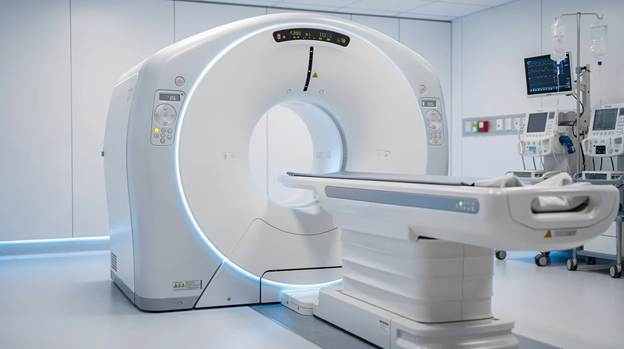
Tight tolerances-often ±0.01 mm or tighter-are critical to image clarity and patient safety. If a bore in the gradient coil housing is mis-machined by just 0.02 mm, or a mounting face is misaligned by 0.05 mm, the gradient fields distort. That distortion causes non-linear spatial encoding, resulting in blurred or shifted image features. In radiotherapy planning, where geometric distortion must stay below 1–2 mm across a 200 mm imaging volume, even small machining errors can have serious clinical consequences. This is where precision engineering and robust quality assurance become non-negotiable.
Elmax Engineering typically works with medical equipment manufacturers on brackets, housings, fixtures, and custom tooling that support MRI and diagnostic equipment production. Precision engineering is critical in aerospace, automotive, and medical sectors, and the medical imaging supply chain demands exactly the kind of repeatable accuracy that a well-equipped CNC machining shop provides.
From Manchester to the World: What Precision Engineering Actually Does
Manchester’s industrial heritage stretches back to the cotton mills and steam engines that powered the Industrial Revolution. Today, that legacy lives on in the region’s precision engineering and cnc machining services firms, which supply high precision components to industries worldwide.
Precision engineering means designing and machining components to exact specifications, tight tolerances, and repeatable, consistent quality. It involves designing components with tight tolerances for reliability, whether the part is a surgical instrument insert or a hydraulic fitting for a crane. Precision engineering services in Manchester are ISO-certified and high-quality, supporting sectors such as medical and food manufacturing alongside aerospace and automotive.
CNC machining uses computer software to control machining tools, enabling repeatable accuracy across thousands of parts. Cnc milling shapes prismatic features like housings and mounting plates. Cnc turning produces symmetrical components such as shafts and rollers. Cylindrical grinding services refines bearing journals to mirror-smooth finishes. Keyway slotting cuts precise slots in drive shafts for torque transmission in conveyors and mixers.
Elmax Engineering Ltd in Stockport serves food, medical, construction, and automotive sectors across the UK with prototyping, small batches, and large-scale production runs. Local companies in Manchester handle orders for both small batch and large-scale production, and B2B customers value predictable lead times, fast setup, cost effective unit prices, and engineering expertise at quotation stage. Materials commonly machined include stainless steels (including 316L and 304), aluminium alloys (6061, 6082), brass, engineering plastics such as PEEK and Delrin, and plastic variants for insulating or lightweight applications. CNC machines can process materials like aluminium, plastics, and brass with equal precision when tooling and speeds are correctly matched.
Precision engineering promotes supply chain resilience and reduces logistics delays-a major advantage as UK manufacturers increasingly reshore component sourcing.
Inside the Workshop: CNC Machining, Turning, and 5 Axis Capability
Step onto a modern factory floor in Greater Manchester and you will find rows of CNC machining centres with digital controls, tool changers, and integrated inspection stations. The hum of spindles and the smell of cutting fluid are constants. Manchester’s precision engineering firms focus on cnc machining for various applications, from medical device housings to automotive brackets.
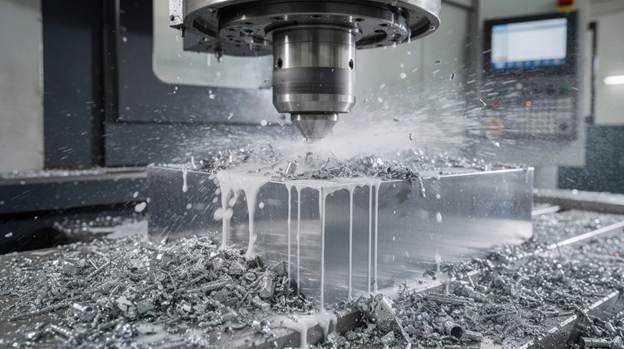
CNC milling service uses rotary cutters to remove material from workpieces, creating flat surfaces, grooves, and slots as well as complex 3D contours. A cutting tool guided along multiple axes can produce pump housings, instrument panels, and sensor mounting plates for food and medical equipment. Robotic loading in CNC milling increases production output five-fold, making efficient production processes achievable even on tight deadlines. 3 to 7-axis CNC machining is prevalent in Manchester’s engineering sector, with advanced machinery handling everything from simple brackets to complex geometries.
CNC turning creates cylindrical parts using rotating material on fixed and sliding head lathes. It can produce components from 1mm to 250mm diameter, making it ideal for parts like shafts and bushings. Automotive and construction machinery rely on CNC lathes for concentricity and surface finish on rollers, connectors, and turned pins. CNC turning can handle complex high precision components that once required manual turning followed by secondary operations.
Where 5 axis cnc comes in is machining intricate parts in a single operation, reducing handling errors and improving accuracy. Complex components for medical, robotics, or packaging equipment that would otherwise need three or four setups can be completed in one, delivering fast turnaround and exceptional accuracy. This latest cnc technology is increasingly adopted across the sector.
Elmax also offers cylindrical grinding for ultra-precise bearing journals and keyway slotting for drive shafts used in conveyors and mixers-processes where surface finish and dimensional control must be flawless.
How a Component is Made: From Drawing to Finished Part
The entire process begins when a customer submits cad files or technical drawings. Elmax’s experienced team reviews the design, checking for manufacturability, and often suggests small tweaks-a slightly larger fillet radius, a repositioned datum-to reduce machining time and keep parts cost effective without compromising function.
CNC machining services cover the full product lifecycle from prototypes to production. The manufacturing process moves from CNC programming through to machining, in-process inspection, and final measurement before delivery. Prototyping services enable rapid product development and testing, and prototyping can significantly reduce time-to-market for new products. Rapid prototyping allows for quick iterations based on feedback, helping identify design flaws before mass production. Prototyping services often utilize advanced technologies like 3D printing alongside traditional cnc for speed. Prototypes can often be turned around within days, depending on complexity and material availability, helping clients move quickly from concept to testing.
CNC machining creates high-precision parts for various applications, and CNC machining can handle both small-scale and large-scale production runs with the same documented setups and programmes.
Everyday Objects That Rely on Precision Components
Many “ordinary” products hide precision engineered parts inside. If you removed those parts, the products would fail-or simply could not be manufactured at all. Without precision engineering, these objects would be unreliable, unsafe, or impossibly expensive to produce.
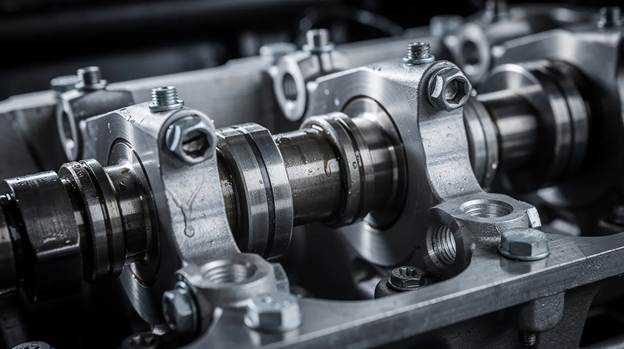
In cars and commercial vehicles, CNC turned brake components, CNC milled engine brackets, and precision shafts in gearboxes and power steering systems must meet tight tolerances to keep drivers safe. CNC machining is essential in industries like automotive and aerospace, where a thousandth of a millimetre can determine whether a part passes or fails.
On food processing lines across Manchester, stainless steel rollers, keywayed drive shafts, hopper parts, and machined guards keep bakeries and bottling plants running hygienically. These bespoke parts must resist corrosion and meet food-grade surface finish requirements.
In construction, machined hydraulic fittings, mounting plates for cranes and lifts, and precision parts in HVAC, power generation, and fire suppression systems rely on the same engineering expertise. Custom parts for scaffolding systems and access platforms must withstand enormous loads without failure.
Consumer electronics-smartphones, laptops, contactless payment terminals-depend on aluminium frames, heat sinks, and connector housings that are all CNC machined somewhere in the supply chain. Even spark erosion and laser cutting play roles in producing the intricate designs found inside modern electronics.
Hidden Heroes in Medical, Food, Construction, and Automotive Sectors
In the medical sectors, Elmax commonly manufactures brackets and fixtures for diagnostic equipment, turned inserts for devices, and precision spacers and housings for lab automation in UK hospitals. Many firms in Manchester precision engineering offer comprehensive assembly and testing capabilities alongside machining.
For food, corrosion-resistant stainless parts such as mixer shafts, conveyor drums, and precision-turned spacers serve hygiene-critical environments. Sheet metal fabrication and welding often complement machined parts in larger assemblies.
Construction demands heavy-duty CNC milled plates, clevises, and turned pins for scaffolding systems, access platforms, and lifting gear-high quality parts where failure is not an option.
In automotive, small-batch and prototype engine components, mounting brackets, and bush housings serve OEMs and motorsport clients needing tight tolerances and fast turnaround. These sectors depend on a trusted partner equipped with the capabilities to deliver complex parts on schedule.
Quality Assurance: Why “Good Enough” is Never Enough
A single out-of-tolerance part in an MRI scanner, brake system, or food processing line can have serious safety and cost implications. In the UK precision engineering sector, valued at around £900 million in recent M&A activity alone, quality assurance is what separates suppliers who win long-term contracts from those who lose them.
Quality assurance in a precision engineering environment means first-off inspection, in-process checks, and final inspection using calibrated gauges and measuring equipment. Companies utilize advanced inspection technology like coordinate measuring machines (CMMs) to verify that every critical dimension matches the drawing. ISO 9001:2015 certification ensures adherence to quality standards, and Elmax Engineering follows robust inspection procedures aligned with ISO-style quality systems.
Material traceability, certification, and documented measurement data are essential for regulated sectors like medical and food. Every batch of aluminium or stainless steel carries a material test certificate, and inspection records follow the part through to delivery.
Consistent quality also reduces waste, rework, and downtime for customers-making parts more cost effective over the long term. When a production process is stable and documented, reject rates stay low and businesses avoid the hidden costs of poor-quality supply.
Maintaining Consistent Quality Across Prototypes and Production Runs
Elmax ensures that a one-off prototype and a 5,000-part batch meet the same dimensional and surface finish requirements by using controlled CNC programmes, documented setups, and repeatable fixturing. This means future batches match the original approved sample exactly, providing the reliability and speed customers need.
Manufacturers in Manchester and across the UK benefit from predictable repeat orders-critical for just-in-time manufacturing and Kanban-style stocking. Process stability gives clients the confidence to plan their own production schedules around guaranteed delivery.
Speed, Cost, and Collaboration: Choosing a Precision Engineering Partner in Manchester
OEMs and manufacturers must balance quality with lead time and price when sourcing cnc machining services. A local Manchester/Stockport supplier like Elmax can reduce transport time, simplify communication, and visit customer sites for engineering reviews-advantages that offshore suppliers cannot easily match. The UK CNC machining market is projected to reach $720.5 million by 2030, and domestic sourcing is a growing trend.
Elmax is equipped for fast turnaround on urgent jobs while maintaining tight deadlines through its experienced team and modern CNC equipment. Collaborative aspects include early involvement in design, help with material selection, and suggestions to switch to 5 axis machining or different process routes to cut cycle times and improve efficiency.
When evaluating any precision engineering partner, look for clear quotation breakdowns, transparent lead times, evidence of quality control, and references from similar industries. Elmax’s two decades of experience since 2003 provide exactly that foundation.
From One-Off Prototypes to Long-Term Supply
Elmax supports the full product lifecycle: initial prototypes, pre-production batches, then regular scheduled deliveries. This flexibility is valuable for businesses developing new medical devices, food machinery lines, or construction products where designs may change after testing.
Stable, long-term relationships allow Elmax to provide more cost effective pricing and better stock planning for repeat parts-turning a supplier into a genuine manufacturing partner.
Conclusion: The Unseen Engineering That Makes Modern Life Possible
Without precision engineering-cnc milling, cnc turning, 5 axis cnc, grinding, and rigorous quality assurance-core technologies like MRI scanners, vehicles, factories, and digital devices would not function. Every high precision part machined to tight tolerances represents the difference between a machine that works and one that fails.
Companies like Elmax Engineering Ltd in Stockport, Manchester, quietly manufacture the precision components that keep UK industry running safely and efficiently. If your products depend on critical machined parts, the question worth asking is whether your current supply chain delivers the consistent quality, accuracy, and fast turnaround your customers expect.
As continued advances in cnc machining services and advanced technology reshape manufacturing, the next generation of everyday objects-and life-saving medical technology-will demand even greater precision. The engineering that makes modern life possible remains, as it always has been, largely unseen but absolutely essential.


Leave a comment