If you have ever received a quote for cnc machining, cnc milling, or cnc turning and felt the number was higher than expected, you are not alone. For manufacturers across the uk, especially those sourcing precision machined components for safety-critical applications, the cost can seem steep at first glance.
At Elmax Engineering Ltd, founded in 2003 in Stockport, Greater Manchester, we specialise in producing high quality components with tight tolerances for sectors including food processing, medical devices, construction, and automotive. Manchester is a hub for advanced manufacturing, and the North West region has a strong precision engineering sector. Greater Manchester’s precision engineering companies serve mission-critical sectors where failure is not an option.
The truth is that every line on a cnc machining quote reflects real investment in equipment, skills, materials, and quality systems. This article provides a practical, B2B-focused cost breakdown covering custom parts, functional prototypes, and high volume production runs. Once you understand each driver, the pricing becomes logical and controllable. CNC machining uses computer-controlled machines for precision manufacturing, and that capability comes at a measurable price.
1. Machine Investment: The True Price of a CNC Machine
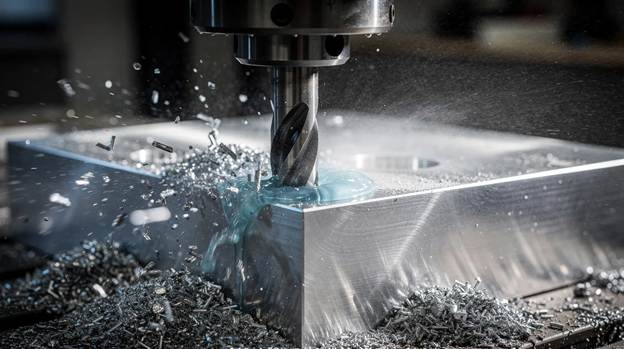
Modern cnc machines and milling machine platforms represent six-figure capital investments. Every hour those machines run, their purchase price, finance charges, and maintenance costs must be recovered through the shop rate charged to customers.
Here are typical UK purchase ranges for 2024–2025:
| Machine Type | Typical UK Cost Range |
| 3-axis CNC milling centre | £40,000 – £120,000 |
| Multi-axis CNC turning centre | £80,000 – £280,000+ |
| Cylindrical grinding machine | £50,000 – £200,000+ |
| CMM inspection equipment | £30,000 – £150,000+ |
These figures exclude installation, calibration, and foundations. Depreciation, preventative maintenance, and annual calibration feed directly into the hourly rate. Modern firms operate some of the UK’s largest cnc machining facilities featuring multi-axis machining centres and CMMs, and advanced cnc machining capabilities include 3, 5, and 7-axis technology.
Specialist equipment like cylindrical grinders, keyway slotting machines, and bore gauges raise baseline capability. CNC milling machines can process parts up to 2000 x 750 x 600 mm, and cnc machining can produce parts with dimensions up to 2000 x 750 x 600 mm. Companies in Manchester handle large components for critical infrastructure with significant 5-axis capabilities. Elmax Engineering’s investment in up-to-date cnc machining services in the Manchester area allows achieving tight tolerances and repeatability critical for the medical industry and safety-critical automotive parts.
2. Setup Time & Programming: The Hidden Cost Behind Each Job
Even a single custom part requires CAD/CAM programming and physical setup before a machine tool makes its first cut. In many cases, this preparation takes longer than the actual cutting time, and the cost must be recovered.
The use of CAD/CAM systems is extensive in precision engineering. A typical workflow includes:
- Receiving drawings or 3D models and checking manufacturability
- Generating toolpaths using computer aided manufacturing software for cnc milling or cnc turning operations
- Designing workholding solutions and selecting cutting tools
- Proving toolpaths through simulation to avoid crashes
- Running a first-off part and performing dimensional inspection
- Generating documentation for traceability
Manchester manufacturers increasingly adopt digital modelling and automation to boost accuracy, and the integration of Industry 4.0 is driving advancements in precision engineering. Automation and digital integration are influencing accuracy across the production process. CNC milling services uses computer-controlled machines to remove material from workpieces with minimal human intervention once the program is proven.
At Elmax Engineering in Stockport, complex tight-tolerance jobs often require 1–4 hours of programming and setup, particularly when both cnc machining and cylindrical grinding are involved. Advanced probing systems can reduce setup time significantly-from roughly 3.5 hours down to around 1 hour in documented cases.
The cost impact is stark: a one-off prototype absorbs the entire setup cost on a single finished part, while a high volume batch spreads it across hundreds of components. Design-for-manufacture collaboration with your machining partner can cut programming and setup time considerably, reducing overall cost per part.
3. Materials & Stock: Why Your Material Choice Matters
Material cost is the most visible element on a quote, but machinability differences often matter more. In precision engineering projects, the wrong material choice can double machining time.
Common materials Elmax Engineering machines include:
- Mild steel and carbon steels – cost-effective, good machinability
- Stainless steel (304, 316L, 17-4 PH) – essential for food and medical devices, but slower to machine and harder on tools
- Aluminium alloys (6082, 7075) – machines 3–5× faster than stainless, lower raw cost
- Engineering plastics (POM, PEEK, nylon) – lighter, corrosion-resistant, but need specific tooling
- Exotic alloys (titanium, Inconel) – high performance but extreme tool wear
Local firms specialise in machining demanding materials such as aluminium and titanium, and local manufacturers are pioneering the production of high-performance tungsten components. CNC machining can work with a variety of materials including metals and plastics, meaning the manufacturing process can handle almost any material. CNC turning can work with metals, plastic, and wood, giving engineers a range of materials to choose from across various materials.
Advanced materials and nanomanufacturing are critical areas of research in Manchester. The University of Manchester is a global centre for graphene research starting from 2004, and the Henry Royce Institute provides access to world-class equipment for materials processing-developments that continue to push material requirements forward.
Key material cost factors include raw bar or billet price, stock sizes available from UK suppliers, wastage from sawing, and certification requirements for medical or food-contact applications. Selecting easier-to-machine alloys where performance allows, or designing parts from standard bar rather than large plate, can meaningfully reduce cost.
4. Tolerances, Surface Finish & Secondary Operations
Tight tolerances and surface finish requirements have a dramatic effect on CNC machining cost. The tighter the specification, the slower the cuts, the more frequent the inspection, and the higher the scrap risk.
In practical terms:
- ±0.1 mm – general machining, standard feed rates, routine inspection
- ±0.05 mm – fine machining, reduced feeds, closer monitoring
- ±0.01 mm or below – high precision work requiring stable machines, climate-controlled environments, and frequent measurement
Demanding surface finishes or geometric tolerances may require additional processes. Cylindrical grinding services achieves tight tolerances and smooth finishes and is commonly used for engine crankshaft and camshaft grinding. Cylindrical grinding can process metals, ceramics, and composites. External cylindrical grinding focuses on outer surfaces of workpieces, internal cylindrical grinding targets the inner surfaces, and centerless cylindrical grinding holds workpieces without centres.
CNC milling can produce complex 3D shapes for various industries, including irregular surfaces and flat surfaces that require a precise finish. A grinding wheel selected for the right grit and bond produces the smooth finishes needed for bearing fits or seal surfaces, helping reduce friction in rotating assemblies.
Secondary operations Elmax Engineering frequently coordinates include powder coating, anodising, zinc plating, heat treatment, and light assembly. Each operation adds handling, logistics, and quality checks to the final product. For example, a shaft requiring grinding after cnc turning to achieve an h6 tolerance costs significantly more per piece than a bracket machined to general tolerances-but the result is a finished part that performs reliably in its intended application, delivering the desired shape and depth of precision the customer needs.
5. Labour, Skills & Quality Assurance in Precision Engineering
Skilled machinists, programmers, and inspectors play a crucial role in Manchester precision engineering. These professionals are scarce and command salaries reflecting their expertise-CNC machinists and setter-operators in the UK average £30,000–£34,000 per year, with programmers and specialists reaching £33,000–£43,000 or more.
Labour elements baked into a typical hourly machining rate include:
- Operator time for setting, monitoring, and adjusting cnc machines
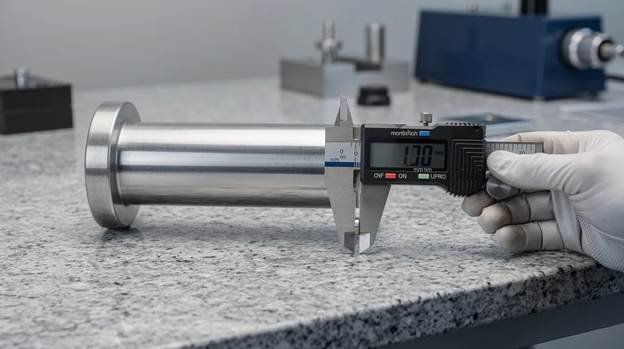
- In-process checks using micrometres, gauges, and bore measurement tools
- Final inspection against drawing specifications
- Documentation, traceability records, and material certificates
- Training and continuous professional development
Manchester’s engineering expertise has increasingly shifted towards high-value sectors including aerospace and medical devices. The sector focuses on high-tolerance components for aerospace, automotive, nuclear, and energy industries, and Manchester is home to a high concentration of expertise in precision-machining parts for aerospace and nuclear industries.
Quality systems such as ISO 9001 certification cost UK firms between £5,000 and £11,000 or more in the first year, with ongoing audit fees. Industry peers like Xometry are ISO 9001:2015 certified for quality assurance, and Hemlock Engineering is fully accredited to ISO 9001:2015. Quality assurance involves thorough inspections at multiple production stages, and providers like Xometry offer optional quality assurance services like First Article Inspection.
Quality is fundamental in safety-critical industries like train braking systems. Elmax Engineering’s focus on high quality parts for food processing and the medical industry demands stringent quality standards, robust inspection routines from first-off checks to batch sampling, and full reports when specified. These processes produce high quality results but require time and skill that contribute to the hourly rate. Higher labour cost in the uk compared with low-cost countries typically yields better communication, faster problem solving, and easier site visits-factors that matter when you are working to tight deadlines.
6. Cycle Time, Volume & Part Complexity
Actual machine cutting time and order volume are the primary levers controlling unit price on cnc machining services. CNC machining allows for high production output with consistent quality, but cycle time varies enormously with complexity.
CNC machining is widely used in automotive, aerospace, and medical industries for complex components that demand speed and accuracy. CNC turning creates cylindrical and circular components. CNC turning machines are also known as cnc lathes, and turning centres produce features symmetrical around a central axis. As the workpiece rotates, cutting tools remove material to create turned parts at high accuracy. CNC turning is used for rapid prototyping and batch production and can produce parts with tight tolerances.
3-axis CNC milling machines are the most common type used for straightforward geometries across different axes. 5-axis CNC milling machines can perform complex multi-axis operations needed for intricate unique parts.
Volume impacts:
- Prototype (1–10 pieces): setup cost dominates; unit price highest
- Low batch (10–100): fixed costs shared; unit price drops noticeably
- High volume (hundreds–thousands): setup amortised; efficiency maximised; unit cost lowest
Once a job is proven, Elmax Engineering can load repeat orders faster using dedicated fixtures, shortening future cycle times. This gives customers the ability to plan production capacity around predictable pricing and reliable delivery.
7. Tooling, Fixturing & Maintenance Costs
Cutting tools, fixturing, and consumables are ongoing overheads factored into every cnc machining quote:
- CNC milling: carbide end mills, drills, face mills in various types and coatings
- CNC turning: indexable inserts for cnc lathes, threading tools, parting blades
- Cylindrical grinding: grinding wheel selection matched to material and finish
- Keyway slotting: broaches or dedicated slotting cutters
Hard metals and abrasive alloys consume tools faster. Long production runs require scheduled insert changes. Custom form tools sometimes needed for specific requirements add upfront cost.
Workholding matters too. Custom soft jaws, fixtures, vices, and collet chucks are essential for awkward geometries. Bespoke fixturing cost is spread over expected order volumes-another reason batch quantities lower unit price.
Routine maintenance-spindle servicing, machine alignment checks, coolant management and disposal-contributes to overhead. None of these items may appear as a separate line on your quote, but they are real costs a precision engineering workshop absorbs daily.
8. Overheads Specific to a Manchester Precision Engineering Shop
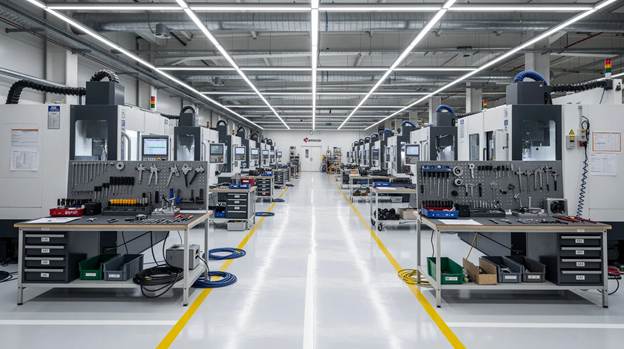
Operating a precision engineering facility in Stockport, close to central Manchester, means contending with UK energy prices and commercial property costs. Industrial electricity in Manchester runs at approximately 26–27 pence per kWh for SMEs, with larger sites paying 18–24 p/kWh on half-hourly meters. A medium workshop running multiple cnc machines can face monthly energy bills of £8,000–£18,000+.
Other overhead contributors include:
- Industrial unit rent or mortgage and business rates
- Compressed air systems and climate control for stable machining conditions
- Production planning, purchasing, and stores management
- Health and safety compliance and waste disposal (chips, coolant, packaging)
- Insurance, IT systems, and administrative staff
Proximity to Manchester’s transport links-M60, M62, Manchester Airport-allows faster delivery to UK manufacturers. This logistical advantage can offset slightly higher unit prices versus remote or overseas suppliers, especially when you factor in communication speed and the option for same-day site visits.
9. How to Reduce Your CNC Machining Costs Without Sacrificing Quality
While precision engineering is capital-intensive, smart design and planning decisions can meaningfully lower your spend. The subtractive manufacturing process rewards forethought.
Design tips:
- Relax tolerances where the application allows-moving from ±0.01 mm to ±0.05 mm can cut cycle time substantially
- Avoid specifying unnecessary surface finishes; only call out critical faces
- Standardise hole sizes and thread forms to reduce tool changes
- Design parts to suit standard bar or plate sizes, minimising waste
Operational tips:
- Batch orders to move from one-off to small or high volume quantities
- Consolidate similar components onto a single purchase order
- Allow realistic lead times so the workshop can schedule efficient production processes
- Share forecasts so your supplier can pre-order materials and plan production capacity
Engage early with Elmax Engineering’s team to review drawings, choose appropriate materials, and decide when secondary processes like powder coating or grinding are truly necessary. For recurring parts, investing once in optimised fixtures can deliver lower prices on every future call-off, ensuring the production process stays lean and cost-effective.
10. Example Cost Scenarios: From Prototype to High Volume
These anonymised scenarios illustrate how cost factors interact on real-world projects from our Manchester workshop.
Scenario 1: One-off CNC milled aluminium prototype bracket (construction sector) A construction client needed a single prototype bracket in 6082 aluminium. Programming and setup took around two hours; the actual milling cycle was under fifteen minutes. Material cost was modest, and no secondary finishing was required. Setup dominated the quote-roughly 80% of the total. Had the client ordered ten pieces, the per-part price would have dropped by around 60%. This is where the process of spreading fixed cost over volume produces a dramatically different result.
Scenario 2: Small batch of tight-tolerance stainless steel shafts (food processing) Twenty 316L stainless shafts required cnc turning followed by cylindrical grinding to achieve h6 bearing fits. Stainless steel is slower to machine-roughly double the cycle time of aluminium-and grinding wheel selection had to balance surface finish against removal rate. Material certification for food contact added documentation overhead. Per-piece cost was roughly double that of a comparable mild steel part at the same quantity, but the finished part met every specification for a hygienic production environment.
Scenario 3: High volume mild steel components with powder coating (automotive) An automotive customer placed repeat orders for 500 mild steel brackets per batch, cnc milled and powder coated. After the first run, dedicated fixturing and proven programs meant setup time dropped by over 70%. Volume brought the unit cost down around 30% compared with the initial batch. With each repeat order, the range of efficiency gains widened further, demonstrating how long-term supplier relationships deliver real savings across industries.
11. Why UK Manufacturers Still Choose Elmax Engineering in Manchester
Despite the cost factors outlined above, many OEMs and manufacturers across various industries choose local cnc machining services over low-cost alternatives. The reason is straightforward: total cost of ownership includes quality, communication, and reliability-not just the number on the invoice.
Since 2003, Elmax Engineering has delivered high quality components with consistent precision, responsive support, and the ability to handle everything from urgent one-offs to scheduled production. Our specific requirements coverage spans cnc turning, cnc milling, cylindrical grinding, keyway slotting, and coordination of finishing for complete, ready-to-assemble custom parts and precision machined components.
Working with a manchester precision engineering partner means easier communication, quick site visits, short transport distances, and faster resolution of engineering changes. When your application demands high precision and your timeline demands speed, proximity and expertise produce the best outcome for the final product.
12. Getting a Transparent CNC Machining Quote from Elmax Engineering
We believe every quote should be clear and traceable back to the cost drivers discussed in this article. To provide an accurate, fast quotation, we need the following from you:
- 2D drawings and/or 3D models (STEP, IGES, or equivalent)
- Material specification and grade
- Quantity: prototype, small batch, or high volume
- Required tolerances and surface finishes
- Any secondary operations: powder coating, grinding, heat treatment, plating
- Delivery timeline and any specific requirements for certification or documentation
For standard parts, we typically return quotes within 24–48 hours. More complex components-such as medical devices, multi-operation assemblies, or parts requiring several machines to produce-may need additional review to ensure accuracy.
We work with manufacturers in the food, medical, construction, and automotive sectors across the uk, not just Manchester. Whether you need to create unique parts from metals or plastic, or you need a range of complex components in a range of materials with a precise finish, we are here to help.


Leave a comment